NewsKit Account
Multi-brand account management
Design Systems · News UK· 2021/22
Design Systems · News UK· 2021/22
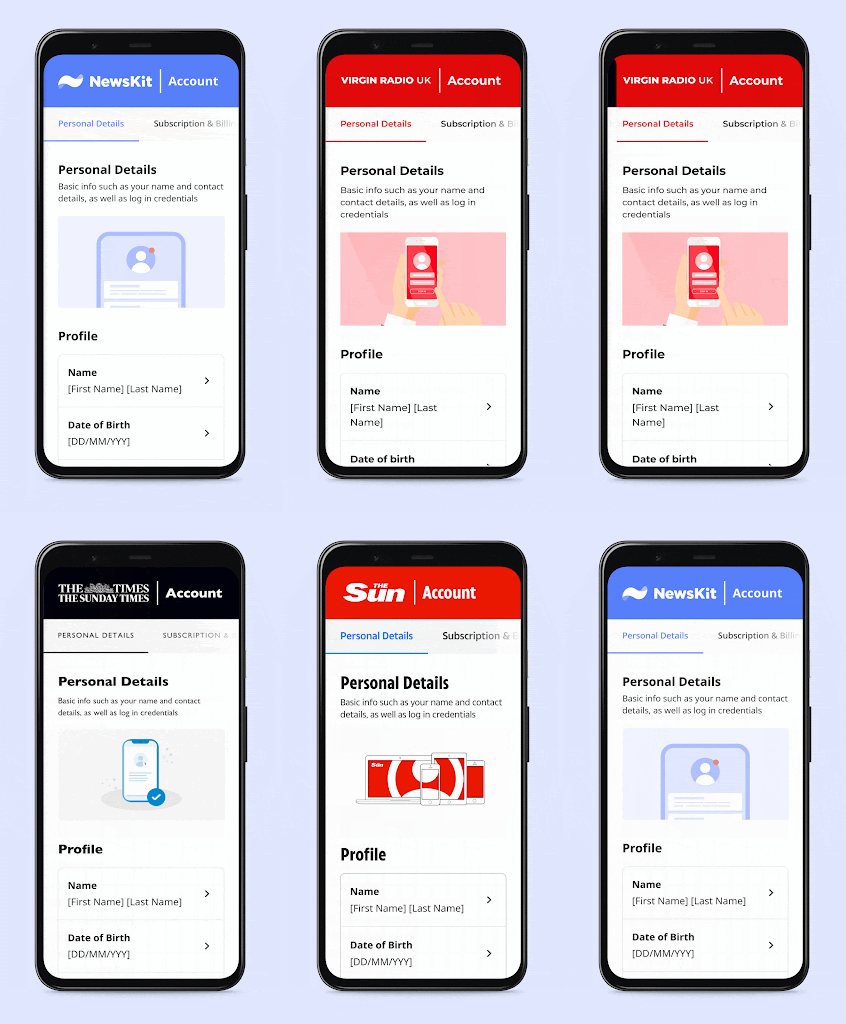
Each of News UK's brands was solving the same problem in isolation. The Sun had their account pages. The Times had theirs. Virgin and TalkRadio brands were being onboarded to the system. Different teams, different designs, different maintenance burdens — and millions of subscribers experiencing inconsistent account management across the same company's products.
The fix wasn't to align through guidelines. It was to build once, theme everywhere.
I led the UI design of the NewsKit Account project, one of the most comprehensive end-to-end product patterns built by the Design System team at that point. Three sections. Nine edit flows. Thirteen subscription and billing scenarios: free trial, payment failure, cancellation, termination, every state in between. All designed as a reusable package that any brand could install and apply their own theme to.
My role wasn't to define what each brand would use, it was to design the technical and structural conditions that made brand-level decisions possible. The scope, the slot mechanism, and the theming infrastructure were all built so teams could configure the pattern to their own needs without requiring intervention from us.
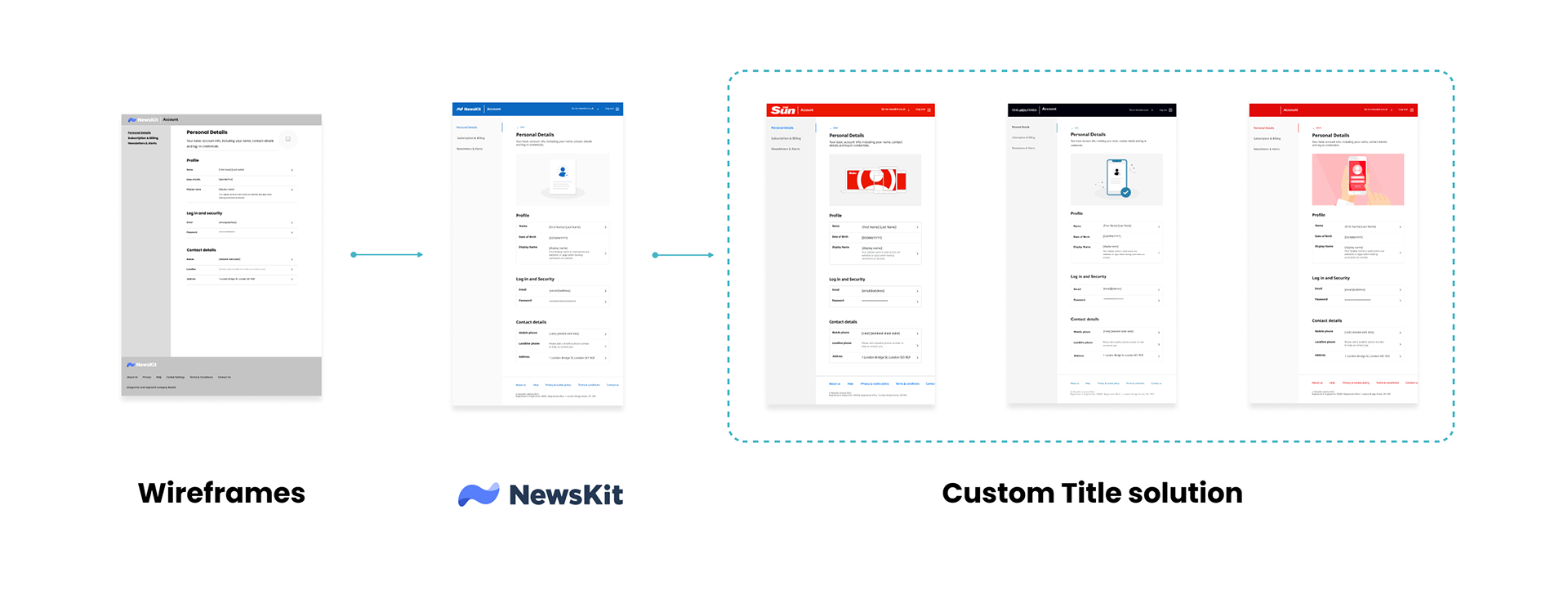
Multi-brand theming was powered by an internal plugin built by our Design Technologist — purpose-built for NewsKit's needs, similar in principle to Tokens Studio but tailored to our system.
The component work required its own ingenuity: this was all built before Figma had native auto-layout or slots. Positioning, resizing, and content-swapping were handled through a "base empty component" slot mechanism we engineered by hand using structural approaches that Figma would eventually implement natively, years later.
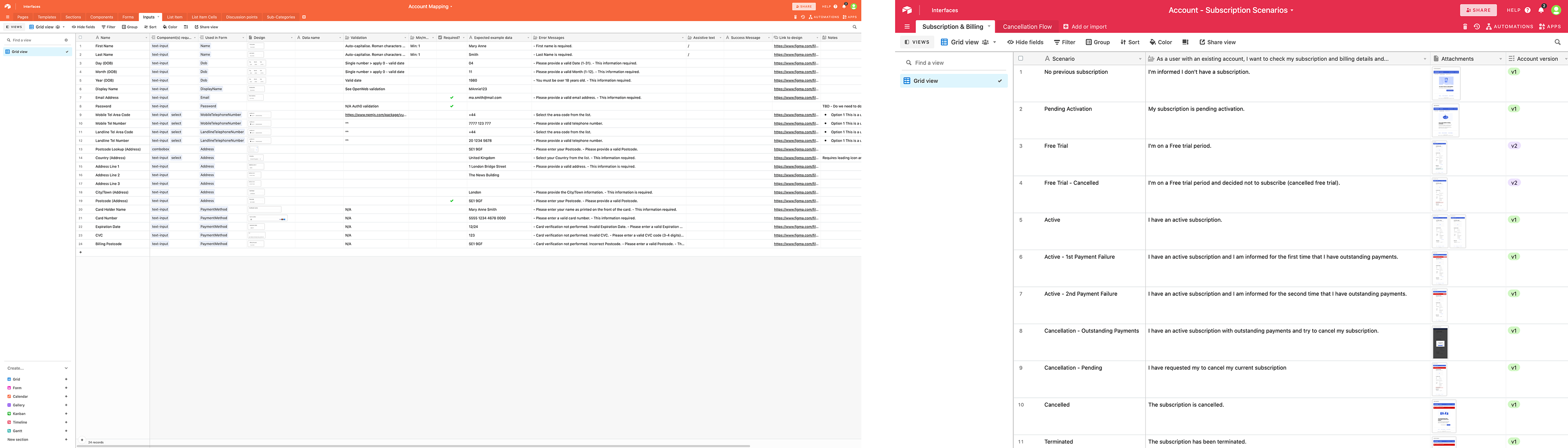
The infrastructure matched that ambition. Working with the lead UX designer, I helped build a full pattern map tracking 28 components, 9 forms, and 24 inputs, each documented with validation rules, error messages, and success states that engineering could implement directly.
The Figma file was structured with the same rigour: Final UI, Handoff, Playground, and per-brand copywriting managed through the Frontitude plugin. One file. Multiple themes. No drift.
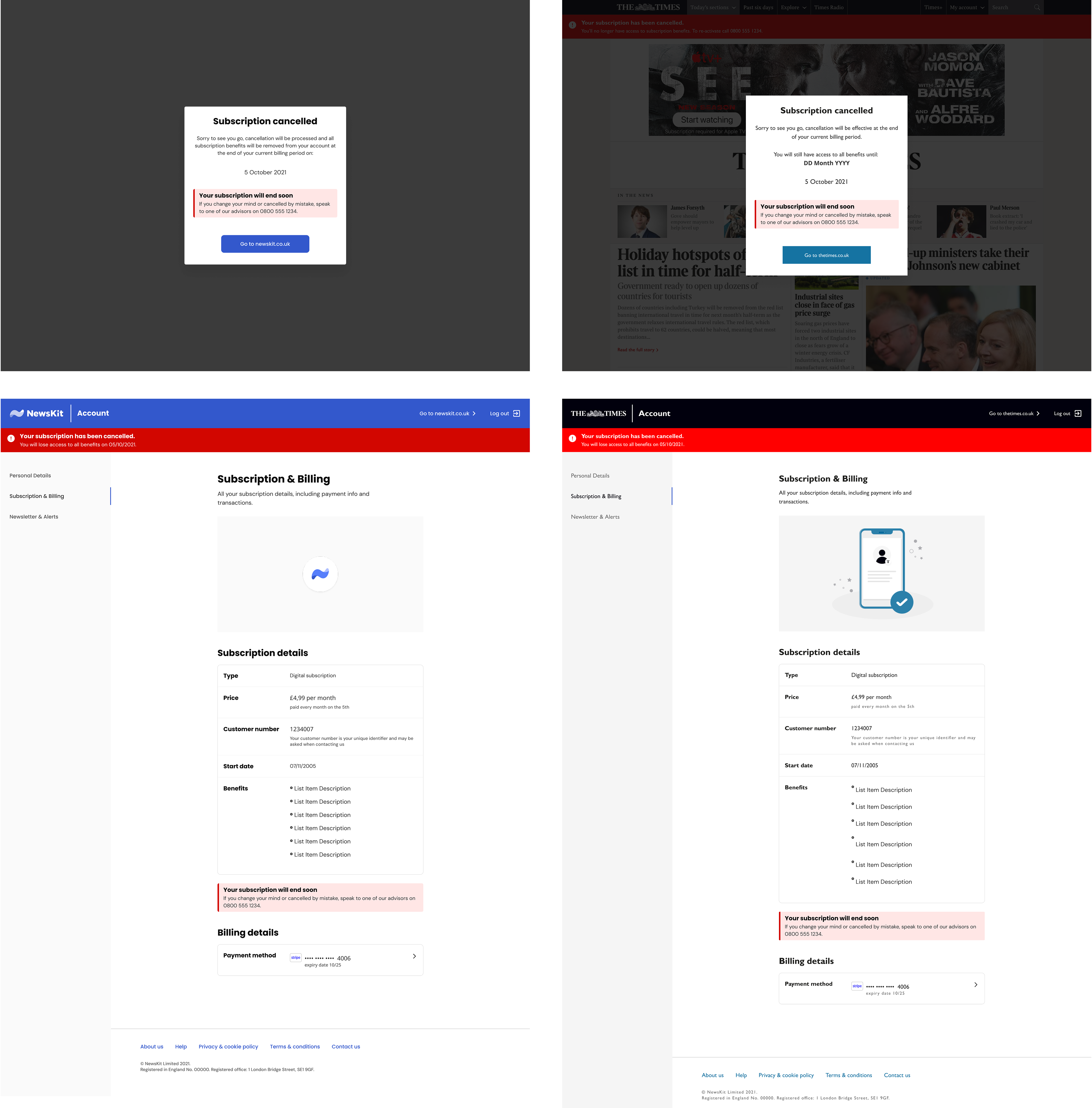
The Account pattern shipped as a publicly documented Solution on newskit.co.uk — one of only two Solutions in the entire NewsKit pattern library. Available to any team in the organisation to adopt, themed to their brand, ready to deploy.
The foundation proved solid enough that new features were built on top of it after I left. Looking back, I didn't have the measurement in place to track adoption across brands — that's a gap I now deliberately build for from day one.

About this work
Looking back, I don't think I fully appreciated what I was part of at the time. News UK is one of the biggest media companies in the UK (The Sun, The Times, The Sunday Times, talkSPORT, Virgin Radio), and I was sitting inside its design systems team, helping build the shared foundation that all of it ran on.
The team was small, but the calibre was high. Our Head of Design Systems had real organisational influence, and the buy-in was genuinely top-down, well-structured, and backed by a strong partnership with engineering.
That kind of environment is rarer than it sounds.
What I understand now that I didn't then: the components were the easy part. The real enabler was the organisational setup. We were a team with actual authority to set standards, and leadership that treated the system as infrastructure, not overhead. Those conditions don't just appear. Without them, the work doesn't land. NewsKit had them. That's worth naming.
I wasn't specialised in a corner, I did a bit of everything, and I learned something from all of it. That breadth became the foundation for the leap into my next role. Taking on more responsibility, leading more deliberately, and growing into the kind of designer who can hold both the craft and the strategy at once. NewsKit is where that version of me started to take shape.
The Account project was where it all came together. But honestly, the whole tenure felt like that. I left with a much clearer sense of what a design system actually needs to work at scale — not just the components, but the culture, the structure, and the relationships that make adoption real.